Minggu, 28 Februari 2016

Man Utd Wonderkid Marcus Rashford blows away Arsenal 3-2 in EPL debut

Kickbola.net 18-year-old Rashford scores double on his debut for Manchester Utd! Wasn't even supposed to be playing. Wonderkid! Marcus Rashford celebrates his fourth goal in his first two games at senior level. Rashford makes his mark with debut heroics
Man United wunderkind Marcus Rashford blows away Arsenal in EPL debut

Man Utd striker joins exclusive company with two goals and an assist in victory over Arsenal Messi needed 544 minutes to score against Cech. Rashford, two in 32.

Marcus Rashford's extraordinary start to life in the Manchester United senior team continued on Sunday afternoon with two goals at Old Trafford to help the Red Devils claim a 3-2 victory over Arsenal - his debut Barclays Premier League goals putting him in exclusive company.

At the age of 18 years and 120 days, Rashford is the third youngest player to score in the BPL for Man Utd (after Federico Macheda and Danny Welbeck) but he is the youngest to score more than once in a BPL match for the club. He is the fourth youngest player to make their first BPL start for Manchester United.

He is exactly the same age as Wayne Rooney was on the day that they both scored their first brace in the BPL, Rooney’s coming in Everton’s 3-3 draw at Southampton in February 2004.

Rashford, who also scored two goals on his first-team debut against Midtjylland in the UEFA Europa League on Thursday night, also assisted Ander Herrera's 64th-minute strike, meaning he is now one of only six players to have had a hand in three goals on their BPL debut.

The other players are Alen Boksic (Middlesbrough), Fabrizio Ravanelli (Middlesbrough), Mladen Petric (Fulham), Sergio Aguero (Manchester City) and Michu (Swansea City).


Man Utd's victory, the first time they have won back-to-back league home matches since September, continues their recent dominance over Arsenal at Old Trafford. The Gunners have won none and lost seven of their last nine league trips to United.

Mesut Ozil set up Danny Welbeck's opener for Arsenal on Sunday, his 18th BPL assist so far this campaign. He is now only two behind Thierry Henry’s record for assists in a single BPL season. Ozil also scored Arsenal's second goal which is the second time he has scored and assisted in the same BPL away fixture.

Arsenal are struggling to pick up points on the road at present, winning two of their last eight BPL away matches (W2 D3 L3) - this following a run of 12 away matches where they won 10.

The 18-year-old is suddenly the toast of Old Trafford.

What has happened to Manchester United?

Oh, right. Marcus Rashford happened.

The 18-year-old wunderkind scored two more goals on his Premier League debut Sunday to lead United to a 3-2 home win over Arsenal, elevating them up to 5th place in the table. This just three days after Rashford bagged a brace in United's 5-1 win over Midtjylland in the Europa League.

Rashford, who's only playing after a string of injuries left Louis van Gaal with no other choice, now has four goals from his first five shots as a Manchester United first-team player.

Let that sink in for a moment. That's as many goals as Radamel Falcao scored for United in 26 games last season.

Rashford's first goal Sunday reminded of his two strikes against Midtjylland, a product of excellent movement and tidy finishing, while his second showed off some rare aerial prowess for a 5'8" tweener.


Wayne who?


It's still too early to tell if Rashford's improbable coming out party is merely a flash in the pan or the advent of a new era at Old Trafford, but United's vastly improved play over the last few days has been undeniable.


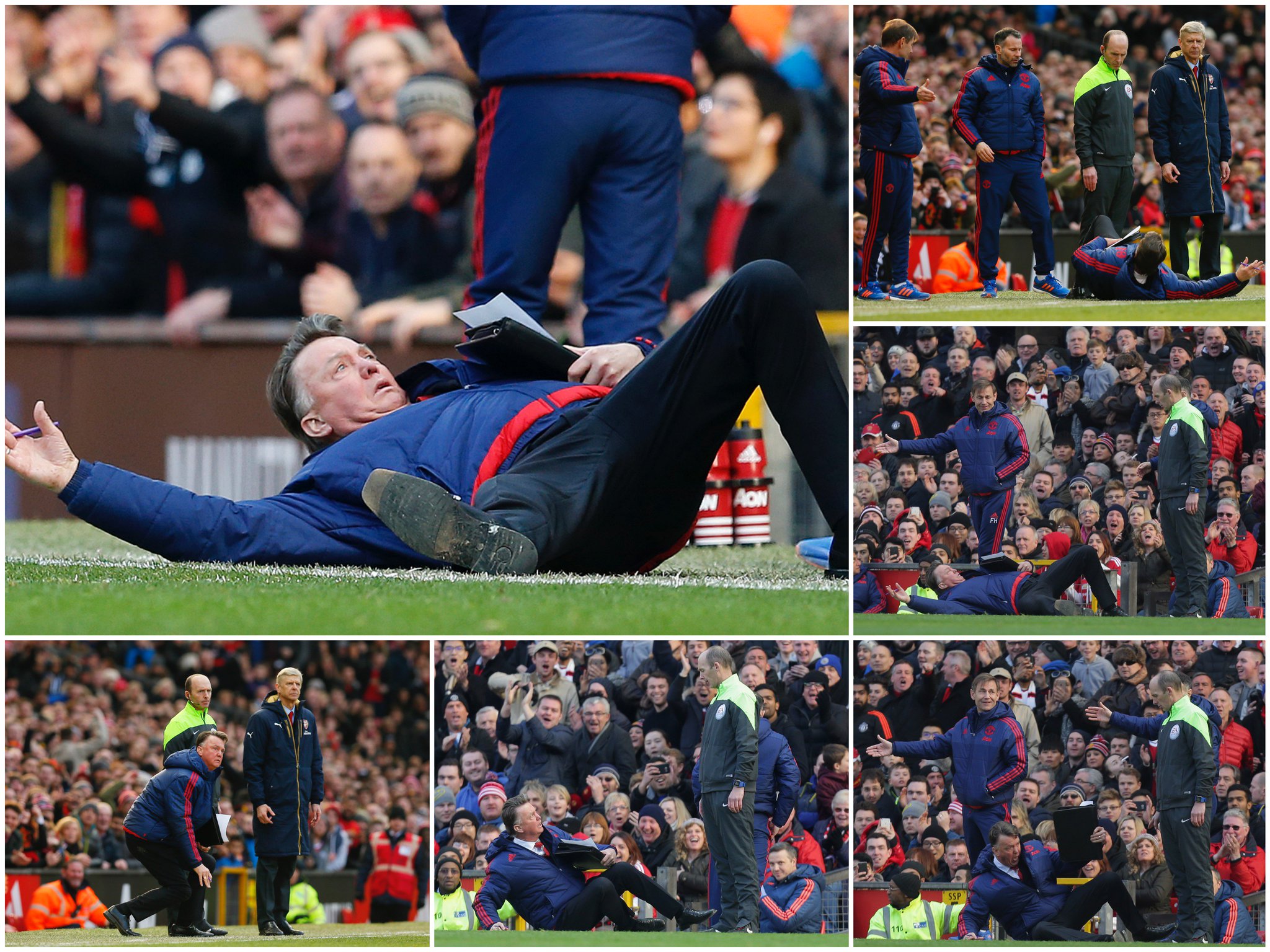
Indeed, ever since Louis van Gaal's comical press conference last Wednesday, his Red Devils have scored eight goals in their last 180 minutes of football, with Rashford accounting for half of them. By contrast, United's seven home games in December and January yielded a total of just four goals.


Not too shabby.


Jumat, 26 Februari 2016

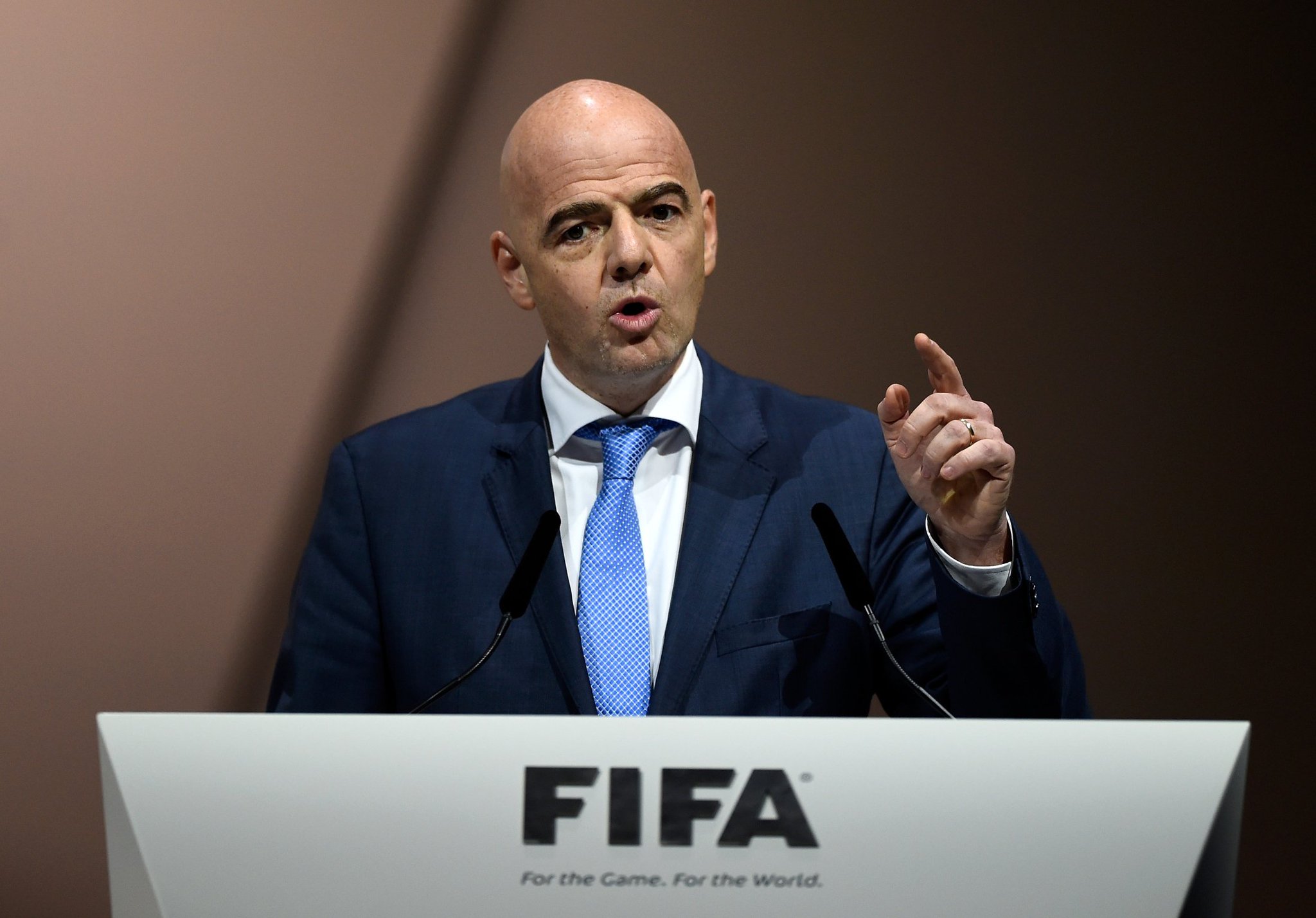
Gianni Infantino elected new FIFA president

Kickbola.net Gianni Infantino To Lead FIFA Into New Era
Gianni Infantino To Lead FIFA Into New Era

ZURICH — Gianni Infantino looked out at the people who rule global soccer, the members of FIFA. Once, twice, he tried to begin his speech, clearly stunned. He had just won the FIFA presidency on Friday, but seemed to be still sorting out how it had happened.

Mr. Infantino’s ascent to perhaps the most powerful position in sports was hardly foreseeable several months ago. As soccer’s beleaguered governing body reeled from one crisis — that of widespread corruption allegations and arrests among its leadership — it seemed to be headed for another. Sheikh Salman bin Ebrahim al-Khalifa, a member of Bahrain’s royal family, was considered the favorite to become the next FIFA president in Friday’s election but faced questions about possible connections to the bloody crackdown on pro-democracy protesters in his country.

Instead, Mr. Infantino, a Swiss administrator, will try to lead global soccer out of its darkest period after FIFA’s voting members, in an upset, chose him to follow the suspended Sepp Blatter, once a Swiss administrator himself. Mr. Infantino, 45, becomes just the ninth president in FIFA’s 111-year history, a reality that is emblematic of its long-embedded resistance to change.

Soccer’s leaders are under intense scrutiny from law enforcement officials in the United States and Switzerland. Many of the game’s top officials have been charged with crimes, including corruption, bribery and money laundering. Against that backdrop, FIFA’s members accepted a significant shift Friday, ratifying an extensive package of governance reforms — including measures that diminish the president’s power — before electing Mr. Infantino to implement the changes, which he endorsed during his campaign.


The long-derided executive committee — notorious for decades of scandals, bribery and political intrigue — will be replaced by a 36-member FIFA council that must include at least six women.

“A new era has been started as we speak,” said Mr. Infantino, the secretary general of UEFA, European soccer’s governing body, since 2009. “You will be proud of FIFA. You will be proud of what FIFA will do for football.”

The balloting that led to Mr. Infantino’s victory may have quietly yielded another winner. In the aftermath of the election, while Mr. Infantino was greeting well-wishers, numerous officials from other national federations stopped at the opposite end of the dais. That was where Sunil Gulati, the president of U.S. Soccer and a member of FIFA’s executive committee, was sitting.

Mr. Gulati and the rest of the U.S. Soccer delegation had worked the floor of delegates between the first and second ballots, trying to swing votes to Mr. Infantino, who gained a startling 27 votes from one ballot to the next. Afterward, many officials pointed to U.S. Soccer’s role in the result — an important development because the full congress votes on World Cup hosts, and U.S. Soccer is likely to submit a bid during Mr. Infantino’s tenure to host the 2026 World Cup.

“I think it’s a good day for the sport,” Mr. Gulati said. “We have a president we think very highly of and respect.”


After the first ballot, Mr. Infantino had 88 votes and was followed by Sheikh Salman (85), Prince Ali bin al-Hussein of Jordan (27) and Jérôme Champagne (7), a former FIFA official from France. The result was surprising in that Mr. Infantino had a slight lead — Sheikh Salman was said to believe he had the support of close to 90 delegates coming in — but it was clear that the decisions of Prince Ali’s delegates would make the difference on the second ballot.

One of those delegates was U.S. Soccer, which supported Prince Ali last May when he was defeated handily by Mr. Blatter and again on the first ballot. Mr. Gulati had told Mr. Infantino, however, that U.S. Soccer would support him if it became clear the election was a two-horse race. After a short meeting with Prince Ali between ballots, during which Prince Ali praised Mr. Infantino, Mr. Gulati and U.S. Soccer set to work.


As many as 10 federations from Concacaf, the region for North and Central America and the Caribbean, are believed to have followed U.S. Soccer and switched from Prince Ali to Mr. Infantino, as well as a handful in Asia and Europe. Tokyo Sexwale, a South African businessman who withdrew as a candidate just before the first ballot, worked as an advocate for Mr. Infantino, too, persuading an African delegate to switch.

All of it added up to a surprising margin for Mr. Infantino, who won with room to spare, totaling 115 votes on the second ballot. Asked afterward about the makeup of Mr. Infantino’s voters, Mr. Gulati smiled.

“I’m much more familiar with how it got to 115 than the first 88,” he said.

Now, Mr. Infantino, who hails from Brig, a tiny village near Mr. Blatter’s hometown, Visp, must try to lead FIFA out of the scandal that brought Mr. Blatter’s 40-year career at FIFA to an inglorious end.

United States and Swiss authorities have accused dozens of soccer officials of diverting millions of dollars from the sport into their own pockets. Several of the sport’s leaders were apprehended in two police raids at the luxury Baur au Lac hotel here.

Federal officials in the United States continue to investigate soccer’s highest echelon, and the Swiss attorney general is looking into a payment from Mr. Blatter and FIFA to Michel Platini, the president of UEFA, which oversees European soccer.

Mr. Blatter and Mr. Platini were suspended for six years by FIFA for ethics violations related to that payment, and it was only because of Mr. Platini’s suspension that Mr. Infantino decided to run for FIFA president. (He was originally planning to simply support Mr. Platini, his longtime boss.)

After entering the race on the final day to declare a candidacy, Mr. Infantino embraced the challenge of convincing the delegates that he was not simply a Eurocentric leader. Running in his first election since he was 18 — when he won the presidency of his local soccer club by promising that his mother would wash the team’s uniforms each week — Mr. Infantino traveled the world to meet with federation leaders.

In his remarks to delegates before the election on Friday, Mr. Infantino spoke in six languages — English, Spanish, French, German, Italian and, for a short spell, Portuguese — as he tried to connect with each region.

In the end, he did enough, promising to return more money to the member federations — “the money of FIFA is your money, it’s not the money of the FIFA president” — as well as pushing an agenda of changed governance. Mr. Infantino also has ideas for expansion, including a 40-team World Cup and the possibility of multiple countries hosting a World Cup.

How much of it comes to fruition remains to be seen. Many of the organization’s members still prefer the status quo. But Mr. Infantino was bullish, even when it was suggested that those who supported his opponents might make it difficult for him to enact all he desires.

“I don’t agree that football is divided,” he said. “Today, it was an election but not a war. It was a competition, but not a fight.”

He held up his hands.


“Now we turn the page,” he said. “Now we start to work.”

Selasa, 09 Februari 2016

The Five Spoke Secondary Part III

In this segment on the Five Spoke Secondary Posts, I'll delve into the blitz strategy that one can institute using TCU's blitz scheme as a template.  Now, a lot of this IS NOT what TCU does, but IS some thing that myself and other coaches have done in the past when utilizing the 4-2-5 defense.

The Basics


To review the coverage aspects of TCU's blitz coverage scheme, simply known as Cover 0, we need to review the rules and the adaptations that TCU has in adapting their coverages to fit their blitz scheme.  The rules in TCU's Cover 0 are very simple and are as follows:


The scheme is completely based upon match ups.  Generally speaking, in college football, unless the tight end you are covering is Gronkowski, then there's no need to waste a corner here in that match up.  So, vs. closed sets (twins closed, or trips closed) then the corner to the nub side will simply "flip" over to the other side and cover the other "number one" receiver in the count.  An illustration of the count system is shown below.

Typical Count System

Count System vs. Twins Closed

Count System vs. Trips Closed


As you can see from the illustrations above, this count system is adapted to the Cover 0 scheme to keep corners covering receivers, and linebacker (LB)/safety types covering tight ends (TE's) and running backs (RB's).  One thing missing from the list of rules is the diagnosing of the position of the number two receiver.  In general, the Strong Safety (SS) and Weak Safety (WS) will have the number two receiver to their respective side, outside the tackles.  If no number two receiver outside the tackles, then they are deemed as "free".  The Free Safety (FS) will handle the number three receiver outside of the tackle box, and if there isn't a number three receiver outside the tackle box, then the FS is listed as "free".  The Read Side LB, will have the number three receiver inside the tackle box and the Away Side LB will have the number two receiver inside the tackle box to his side.

Now, as we know, somebody is blitzing, so there won't be seven defenders involved in coverage.  As is the case with  most six man pressures, there will be five guys in coverage.  The FS is generally the adjuster when it comes to blitzing in this scheme, however this isn't always the case.  There are also some calls when a defender, by alignment, does not have good leverage on who he is supposed to cover (as is the case when the SS is asked to cover an attached TE).  In this case, the SS and FS can "banjo" the TE, so long as the FS is not covering somewhere else for another blitzer (think Bullets vs. two back sets for instance).  The LB's also have some calls and rules that help them distinguish who is covering who, but for this post, I am just concerned with the fact that you know the basics.

Banjo concept


Blitz Coverage


Now that the basic rules have been established a quick review of some basic man blitzes from the 4-2-5 is listed below:


  • Bullets- Both LB's blitzing.  This means all five defensive backs (DB's) will be involved in the coverage (although the coverage is not just limited to the DB's, the defensive line (DL) can also be involved by adding certain calls).
  • Smokes/Lions- One or both of the outside safeties (OSS's) are blitzing.  In this case, the LB's, and the FS would be involved in coverage along with the Corners.  If tagged, a DL could also be involved.
  • Dogs- An OSS and a LB are blitzing to one side of the formation.  Now, both Corners, the FS, a LB and the OSS not blitzing are part of the coverage.
  • Bullets Thunder- This means an OSS, and both LB's are blitzing.  Now a DL must be added into the coverage mix along with the OSS not blitzing, the Corners and the FS.
  • Mob- Here, both OSS's are blitzing (if they can by rule) and the LB's are blitzing.  The DL, the FS and the Corners are all now part of the coverage.
Again, this is just the basics.  I know TCU does this, and Boise State does that, etc., but this is just meant to be a review.  I strongly suggest going to Cripes! Get Back to Fundamentals or to Blitzology to get a better understanding of each individual blitz if you aren't familiar with them already.

For this post, I'm focusing mainly on the secondary and how it handles blitzing one of its own.  Bullets are not a major factor, because the five "cover guys" are doing just what they do best...cover.  What I'm more concerned with are when one, or both of the OSS's are involved in a blitz.  

To understand the blitz coverage, one needs to review the second post in this series about alignment.  Your blitz attack, should mirror your base defense against the offense you are facing.  To drastically alter your alignment just to blitz is to tip off exactly what you are trying to do to the offense.  When blitzing members of the secondary (mainly Dogs and Smokes) there are a variety of ways to tag the blitz as to know who and where the blitz is going to be coming from.  These tags are critical when matching the blitz up to base alignments.  Let's take a look at each series of blitzes involving a member of the secondary to  understand who this system works.

Smokes

As mentioned above, Smokes are a safety blitz, by either one or both of the OSS's.  Smokes can be tagged Wide, Short, Thunder or Lightning.  A wide call indicates that the safety to the wide side of the field will be blitzing.  A short call would be just the opposite.  Thunder indicates the safety to run strength will be blitzing, while Lightning is the opposite tag, meaning the safety away from run strength would blitz.  A Double Smoke call would indicate that both safeties are blitzing.

Coverage, when blitzing a DB has to be set up in a way that no man is left open.  One unique thing I noticed when learning this defense is that TCU rarely checks out of blitz.  If a cover guy is needed to cover instead of blitz, he covers and someone else will blitz for him.  For instance, if a Double Smoke is called vs. a 2x2 set, then one of the safeties, by rule, cannot blitz because you have a match up issue with an inside LB (ILB) covering a speedy wide receiver (WR).  This situation is where one of the safeties will make a "switch" call.  What switch does is put the DB in coverage and lets the ILB take the responsibility of blitzing.


Where the flexibility of the defense comes into play is clearly evident with the switch call.  I'll add to this even further.  I faced a very dangerous RB  in the past that was as deadly running the ball as he was catching it out of the backfield.  During that week, we changed the Smoke scheme up to where we ended up with the FS coming down into the box to cover the RB and both ILB's ran the Smoke, instead of the safeties.  This is illustrated below.


What this allowed us to do was keep a six man pressure on, and keep our best coverage options in place.  The reason we didn't simply call it Moe and Woe (in TCU terms this is Mike off Edge and Will off Edge, although I think TCU calls their ILB's Mike and Sam) was that sometimes they would line up said good RB as a slot receiver and bring in their backup.  In that case, we didn't want to switch both sides, only the side this player was on.  Again, you can see the flexibility of the defense.  Our guys were simply trained, that when this player (who wore jersey number 21) aligned in the slot, that safety covered and gave a switch call.  Everyone else simply ran Double Smoke.


If this would've been to the other side of the defense, we had our FS cover number 21, and ran the exact same look.  The reason for this is simple, despite the fact our SS is labeled as a safety is only in name.  This player, generally has been more LB than safety.  In the theme of keeping the best match ups possible, our FS was a better cover player than our SS, so we let the SS run the Smoke, and the FS would cover number 21.  My main point here is to not get caught up in what TCU does, but understand the basic concept and the dynamics of the scheme.

Dogs

As I discussed earlier, Dogs are both a Bullet and a Smoke to one side of the formation.  Dogs are similar to Smokes in that they can be called Wide and Short, as well as Strong and Weak.  One common problem with Dogs, is that of coverage.  The FS has to cover for the blitzing OSS, whereas the opposite OSS may be asked to come across the formation and handle a third receiving threat.  This was never more evident that when TCU faced Wisconsin in the Rose Bowl a few years back.  The play that sealed the game was a Dog blitz run into a Trips formation.  The problem with Dogs is if the WS doesn't get over in time to cover the number three receiver out of these formations.  I've alluded to this in other posts on TCU's blitz scheme.


In the above example, the "Frog" Dog is a Dog blitz run to the side of the offset RB (in this example it would be called Frog Dogs C in TCU terminology).  As we can see the blitz coverage rules hold up, with the FS covering for the blitzing SS and the WS handling the number two receiver outside the tackle box.  The away side LB would have the RB.  Now, the away side LB doesn't have very good leverage here, so the blitz would more than likely be tagged with something such as a "peel" call so that there would be flare control on the RB.  No matter, the basics are pretty much covered.  Against a trips set, things would shake out as follows:


Again, all of this is just the basics.  The FS covers for the blitzer, but must signal to the WS to cover the number three receiver to the read side.  The away side LB will take the RB.  Again, TCU utilizes some other calls that assist the LB that isn't blitzing in his coverage on the RB.

Where the flexibility comes into play is with something I encountered back in 2013.  I had two prototypical deep safeties.  Long, rangy, and both ball hawks.  Both were pretty good in coverage, and did a decent job of coming downhill and playing in the box when needed to.  My problem was my SS.  My SS was a young man, of tremendous heart and character, but extremely small stature, and minimal athletic ability to be labeled a "DB".  His coverage skills were poor, but he had a knack for getting to the football.  His 5'5" 165 pound frame didn't lend him well to playing inside the box, because as soon as an offensive lineman (OL), got his hands on him he was finished.  Where this young man really excelled was when we brought him off the edge, these same OL, couldn't block him.  His quickness and lateral change of direction speed in tight areas made him a nightmare to block.  To add to this, my WS was almost the complete opposite.  When he blitzed him, he was easily picked up, and quite simply put, didn't care anything at all about being blitzed.  Don't get me wrong, he was smart, and was a master at keeping the away side coverage aligned and in the proper call, but he just didn't have that knack for getting after a ball carrier, or QB when being blitzed.  What would end up happening to us, is we'd get into a blitz, and by alignment or motion, it would end up being the WS getting blitzed and not the SS.  This caused us some grief early on, until discussing the subject with a good friend, shed some light on the flexibility of the scheme.

This was pretty much my SS

What my friend and I came up with is what I later coined "Scottie" blitzes.  Since my SS's name was Scottie, I named it after him!  What a Scottie tag did was tell my SS no matter what the blitz was (Smoke or Dog) he was running the blitz.  For instance, if we wanted to bring a blitz from the boundary, the SS (Scottie) simply switched with our WS and ran the blitz.  The WS would become the safety away from the blitz and cover.  The FS would travel with Scottie and would cover the number two receiver to the side the blitz was being run to.  We had Scottie Dogs and Scottie Smokes, but all of them were consistent.  It was quite simple to teach, and even easier to execute as it actually gave the players less to  think about.  My FS, who could be absent-minded at times, simply had to follow Scottie, and cover the number two receiver outside of the tackles.  My WS, who was very intelligent simply covered the number two receiver outside the tackle box away from the blitz.  A good illustration in the differences between the two blitzes is shown below with a Frog Dog.  Normally, to a trips set with the RB set weak, the weak side LB and WS would blitz this formation and the SS and FS would cover number two and number three, respective, to the trips side.  Well, if we were running a Scottie Frog Dog, then our SS simply went to the side of the RB and blitzed, whereas the WS replaced him, covering the number two receiver into the trips side.


What this little tactic did to our blitz scheme was actually twofold.  First, it put our best blitzer doing what he did best, blitz.  It also kept him from being in coverage, where he was, quite simply put, a liability.  Secondly, this made blitzing our WS EVEN BETTER.  Yes, you read that right.  Teams would scheme us, and figure out who our blitz guy was and so we were seeing them adjust protection in the direction of "Scottie".  Well, we'd Dog or Smoke away from Scottie every now and then and those blitzes hit pay dirt over 95 percent of the time that season.  Even though we weren't sending our best blitzer, it's easy to blitz when a team doesn't think your blitzing!

Conclusion

Again, as with the other posts in this series, one can see you don't have to run the 4-2-5 verbatim to what they do in Fort Worth.  The general idea behind Gary Patterson's scheme is so much more than just being able to call "Field G Army Wide Dogs B Silver".  It's the ability to pigeon-hole your players into what fits them the best within the defense.  Had I just simply stuck to what TCU did in 2013, we wouldn't have been anywhere near as good of a defense.  If there is one thing that you should take away from these posts, it is the age-old football axiom of "Think Players, not Plays".  This used to be an offensive point of wisdom, passed from one offensive coordinator to the next, however it can also be adapted to the defensive side of the football.  Don't ask your players to be something they are not.  My Scottie, was not a DB, as he struggled with man-to-man coverage, despite us doing one-on-ones' on a daily basis.  What he could do, was be the most disruptive little "fly-in-the-ointment" when we blitzed him.  Flip that around and the same could be said for our WS.  He wasn't going to do well if we blitzed him, yet, he was very solid in coverage.  Again, adapting the scheme to fit your players is the common theme or thread that needs to be taken away from these posts.  Hopefully I was able get you to understand that in just three posts!

Duece